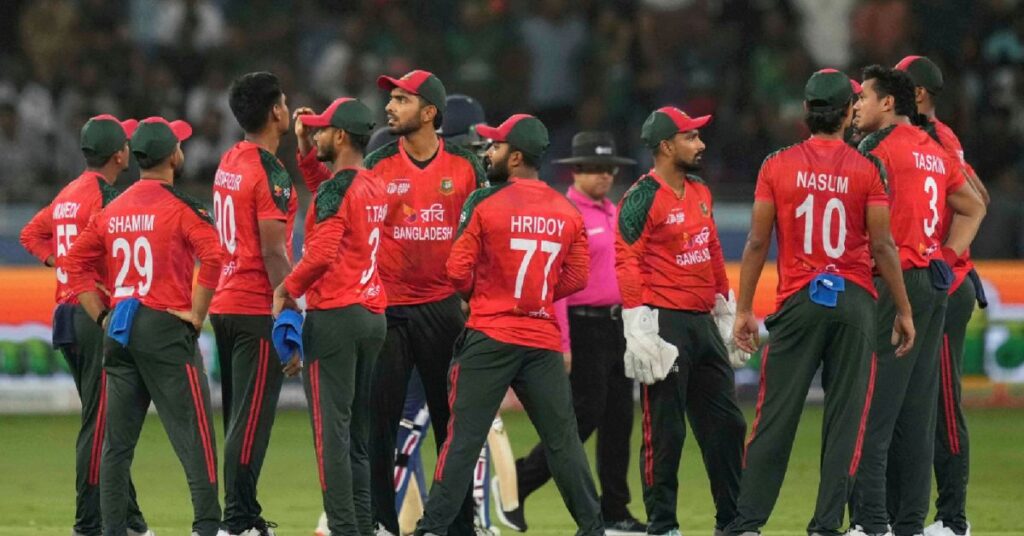

ICC Hands Ultimatum to Bangladesh – Play in India or Be Replaced by Scotland
The build-up to the ICC Men’s T20 World Cup 2026 has taken a dramatic and unprecedented turn after reports emerged that the International Cricket Council (ICC) has issued a firm ultimatum to Bangladesh: play the scheduled matches in India or risk being replaced by Scotland in the tournament.
What began as a venue-related disagreement has now escalated into one of the most serious governance standoffs in modern cricket. With deadlines imposed, strong words exchanged, and alternative teams reportedly identified, the controversy has moved beyond administrative debate into a moment that could redefine how international cricket handles political, security, and organisational disputes.
This blog breaks down the issue in detail—how the situation unfolded, why the ICC has taken such a hard stance, why Scotland has been mentioned as a replacement, reactions from across the cricketing world, and what this ultimatum could mean for the future of global tournaments.
Background: T20 World Cup 2026 and the Hosting Plan
The ICC Men’s T20 World Cup 2026 is scheduled to be jointly hosted by India and Sri Lanka, with matches spread across multiple venues in both countries. The tournament is one of the ICC’s flagship events, involving:
- Global broadcast commitments
- Multi-year commercial agreements
- Extensive logistical planning
Bangladesh, a full ICC member and regular World Cup participant, was originally scheduled to play its group-stage matches in India as part of the approved fixture list.
However, in the months leading up to the tournament, Bangladesh raised objections to playing in India, citing security concerns and broader regional sensitivities. The Bangladesh Cricket Board (BCB) formally requested that its matches be shifted to Sri Lanka, the co-host nation.
Also Read: Gautami Naik, Sayali Satghare Star as RCB Clinch 5th Straight Win, Ensure WPL 2026 Playoffs Berth
From Request to Standoff: How the Dispute Escalated
Initially, Bangladesh’s request was framed as a logistical and safety concern. Discussions were held between:
- The BCB
- The ICC
- Local organisers
However, as weeks passed without resolution, the situation hardened. The ICC reportedly maintained that:
- The schedule had already been finalised
- Security assessments were completed
- Changes at this stage would disrupt tournament integrity
Bangladesh, on the other hand, insisted that player safety and national considerations could not be compromised.
This deadlock eventually led to the ICC issuing what has now been described as an ultimatum.
The Ultimatum: Play in India or Be Replaced
According to multiple reports, the ICC has informed Bangladesh that:
- It must confirm participation in India as per the original schedule
- Failure to do so would result in withdrawal from the tournament
- In such a scenario, Scotland would be invited to replace Bangladesh
This is one of the strongest positions the ICC has taken against a full member in recent times, underlining how seriously it views the situation.
The message is clear: World Cups cannot be held hostage by prolonged uncertainty.
Why the ICC Took Such a Hard Line
From the ICC’s perspective, several factors have pushed it towards issuing an ultimatum:
1. Tournament Integrity
Allowing teams to selectively choose venues could undermine the competitive balance of global tournaments.
2. Commercial Commitments
Broadcast contracts, sponsorships, and ticketing depend on fixed schedules and teams.
3. Precedent Risk
Granting Bangladesh an exception could encourage similar demands in future events.
4. Time Pressure
With the tournament approaching, last-minute changes carry high operational risk.
The ICC believes that without firm action, the credibility of its tournaments could be compromised.
Why Scotland Has Been Named as Replacement
The mention of Scotland as Bangladesh’s potential replacement is significant and symbolic.
Scotland:
- Are a strong associate nation
- Have consistently performed well in ICC qualifying events
- Are next in line based on rankings and qualification pathways
From the ICC’s viewpoint, replacing Bangladesh with Scotland would:
- Maintain tournament structure
- Reward performance in the global pathway
- Demonstrate that participation is conditional on compliance
However, such a move would also be historic—and controversial.
What Bangladesh Stands to Lose
If Bangladesh is indeed replaced, the consequences would be severe:
Sporting Impact
- Loss of World Cup participation
- Missed opportunity for players on the biggest stage
Financial Impact
- Reduced ICC revenue share
- Loss of sponsorship exposure
Reputational Impact
- Strained relations with the ICC
- Perception of non-compliance
For a team that has worked hard to establish itself in global cricket, exclusion from a World Cup would be a massive setback.
Bangladesh’s Position: Safety and Sovereignty
Bangladesh has consistently maintained that its stance is based on:
- Player safety
- Government advisories
- National interest
Officials have reportedly rejected what they describe as “coercion”, arguing that:
- Concerns were raised in good faith
- Dialogue should replace deadlines
- Sovereign boards cannot be forced
The use of words like “ultimatum” and “pressure” suggests deep frustration within the BCB.
Players Caught in the Crossfire
While administrators debate, players remain the biggest casualties.
Bangladesh cricketers have:
- Publicly expressed desire to play the World Cup
- Continued training amid uncertainty
- Faced mental stress due to unclear futures
Many players have stated that they want to play cricket regardless of venue, highlighting a disconnect between administrative decisions and athlete aspirations.
Reactions From the Cricketing World
Former Cricketers
Several former players have urged compromise, warning that:
- Excluding a full member could damage the tournament
- Players should not be punished for administrative disputes
Fans
Bangladesh fans are divided—some back the board’s stand, others fear the consequences of isolation.
Analysts
Cricket analysts describe the situation as a governance crisis, questioning whether the ICC’s approach is firm leadership or excessive rigidity.
The Pakistan Factor and Regional Context
The controversy has also drawn attention because:
- Pakistan already plays under a hybrid arrangement
- The Pakistan Cricket Board has reportedly supported Bangladesh’s stance
This regional context complicates matters further, as it raises questions about consistency in ICC decision-making.
Is Replacing a Full Member Even Realistic?
Historically, replacing a full ICC member in a World Cup is almost unheard of.
While technically possible under tournament regulations, such a move would:
- Spark legal challenges
- Invite political scrutiny
- Create long-term governance tensions
This is why many observers believe the ultimatum is designed to force a resolution, not necessarily to execute replacement.
What Happens If Bangladesh Backs Down
If Bangladesh agrees to play in India:
- The immediate crisis will end
- The ICC’s authority will be reinforced
- Tournament preparations can proceed smoothly
However, resentment could linger, affecting future relations.
What Happens If Bangladesh Refuses
If Bangladesh refuses:
- ICC could trigger replacement protocols
- Scotland could enter confirmation discussions
- Bangladesh may face sanctions beyond this tournament
Such an outcome would mark one of the most dramatic moments in ICC history.
Broader Implications for World Cricket
This episode raises critical questions:
- How much flexibility should the ICC allow?
- Where does player safety end and governance authority begin?
- Can global tournaments survive geopolitical realities?
The answers will shape future World Cups.
Commercial Stakes Behind the Scenes
Beyond sport, massive commercial interests are involved:
- Broadcast rights worth billions
- Sponsorship obligations
- Host nation investments
The ICC’s urgency reflects the scale of these stakes.
Why This Is a Defining Moment for the ICC
The ultimatum represents a defining test of ICC leadership.
If the ICC:
- Holds firm, it reinforces authority
- Backs down, it risks appearing weak
Either outcome will set a precedent for decades.
What Fans Want Above All
Across nations, fans want:
- The best teams competing
- Politics kept out of cricket
- A fair, uninterrupted World Cup
A tournament without Bangladesh—or with unresolved controversy—risks losing some of its spirit.
Possible Endgame: A Quiet Compromise
Despite the harsh rhetoric, many believe the most likely outcome is:
- Back-channel negotiations
- Face-saving compromises
- Limited concessions without public climb-downs
Such outcomes are common in international sport, even if public positions appear inflexible.
Conclusion: Cricket at a Crossroads
The ICC’s reported ultimatum to Bangladesh—play in India or be replaced by Scotland—has pushed the T20 World Cup 2026 into uncharted territory. What began as a venue concern has evolved into a confrontation over authority, precedent, and the future of cricket governance.
As deadlines loom, the hope across the cricketing world is that dialogue prevails over exclusion. Because while rules matter, the essence of the World Cup lies in bringing nations together through the game.
The coming days will not just decide Bangladesh’s participation—they may well redefine how international cricket navigates the complex intersection of sport, politics, and global responsibility.