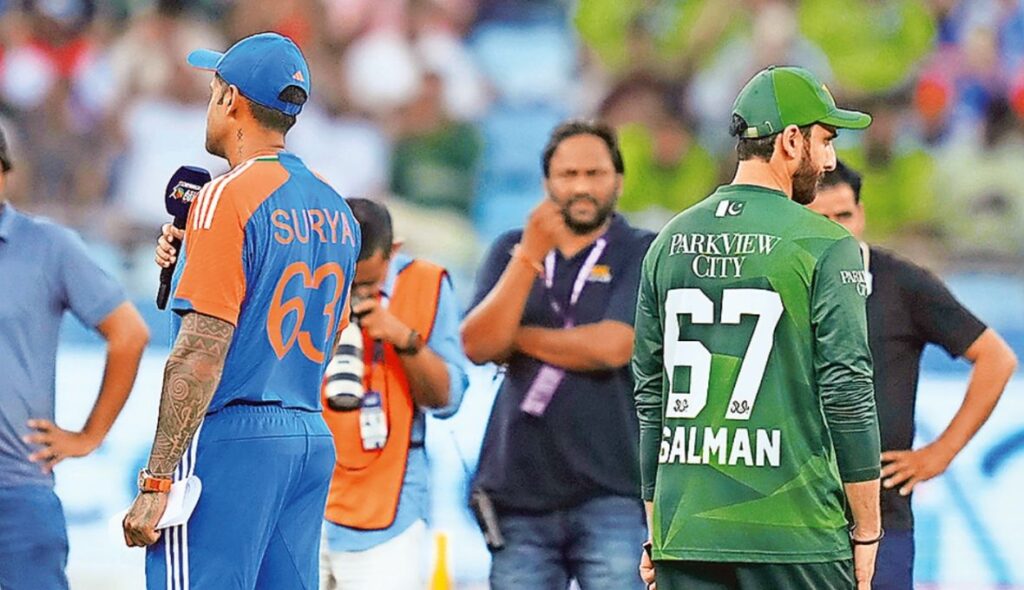

Don’t Boycott Tournament but Don’t Play India Match’: Rashid Latif Reverses Stance on Pakistan T20 World Cup Boycott
The debate around India vs Pakistan cricket matches has once again taken center stage after former Pakistan captain Rashid Latif made a striking statement regarding the ICC T20 World Cup. Known for his outspoken views and candid opinions, Latif recently reversed his earlier stance on a potential Pakistan boycott of the T20 World Cup, instead suggesting a middle path: Pakistan should not boycott the tournament but should avoid playing India.
Latif’s remarks have sparked widespread discussion across cricket circles, fans, and analysts, especially given the political and sporting sensitivities surrounding India-Pakistan matches. Adding another layer to the debate, Latif also addressed the hypothetical yet highly charged scenario of India and Pakistan meeting in a T20 World Cup final—a situation that would test cricketing logic, diplomacy, and administration alike.
This blog explores Rashid Latif’s comments in detail, the background behind the boycott debate, the historical context of India-Pakistan encounters, and what such statements mean for Pakistan cricket moving forward.
Rashid Latif and His Influence on Pakistan Cricket Discourse
Rashid Latif has always been a strong voice in Pakistan cricket. As a former captain and wicketkeeper, he has never shied away from expressing his opinions on selection policies, PCB decisions, or international cricket politics. Over the years, his statements have often ignited debate, sometimes dividing fans but always keeping discussions alive.
When Latif speaks about Pakistan’s participation in global tournaments, especially those involving India, his words carry weight because they echo the sentiments of a section of fans who feel cricket should reflect national pride and political realities.
However, in his latest comments, Latif appeared to take a more pragmatic and strategic approach, moving away from an outright boycott call.
The Original Call for Boycott: What Changed?
Earlier, Rashid Latif had reportedly supported the idea that Pakistan should consider boycotting the T20 World Cup if political or administrative issues continued to overshadow cricketing fairness. This view aligned with a section of public opinion that believes Pakistan often faces unfair treatment in international cricket schedules, venues, and governance.
However, in his revised stance, Latif clarified that a full boycott would harm Pakistan more than it would help.
Why Latif Reversed His Stance
Latif’s reasoning is rooted in realism:
- ICC Tournaments Are Crucial for Pakistan Cricket
- Financially
- Competitively
- In terms of global visibility
- Boycotting Would Isolate Pakistan
- Missing global events impacts player exposure
- Reduces influence within ICC structures
- Players Should Not Suffer
- Cricketers train their entire careers for World Cups
- Political decisions shouldn’t derail sporting careers
By acknowledging these realities, Latif adjusted his position to suggest that Pakistan should participate in the tournament but take a stand selectively.
“Don’t Play India Match”: The Core of Rashid Latif’s Argument
The most controversial part of Latif’s statement was his suggestion that Pakistan should avoid playing India, even if it means forfeiting points.
What Latif Meant by This
Latif did not advocate abandoning the tournament entirely. Instead, he proposed that Pakistan:
- Participate in the T20 World Cup
- Compete against other nations
- Refuse to play India as a form of protest
This, according to Latif, would allow Pakistan to:
- Maintain its presence in global cricket
- Avoid political and emotional flashpoints
- Send a message without self-destruction
While controversial, this idea has found some support among fans who feel India-Pakistan matches have become overly politicised.
India vs Pakistan: Cricket’s Most Politicised Rivalry
No rivalry in world cricket comes close to India vs Pakistan. Every match is more than a sporting event—it is a spectacle watched by hundreds of millions and scrutinised by governments, media, and sponsors.
Why These Matches Are So Sensitive
- Historical conflicts between the two nations
- Political tensions that spill into sporting decisions
- Security concerns and diplomatic challenges
- Media pressure and public sentiment
As a result, every ICC event reignites debates over:
- Neutral venues
- Scheduling fairness
- Travel permissions
- Bilateral cricket freezes
Latif’s comments are rooted in this long-standing complexity.
What If Pakistan Faces India in the T20 World Cup Final?
One of the most intriguing aspects of Rashid Latif’s statement was his response to a hypothetical but dramatic scenario:
What happens if Pakistan and India meet in the final?
Latif’s Take on a Final Showdown
According to Latif, such a situation would create a crisis for cricket administrators rather than players. A World Cup final between India and Pakistan is:
- A commercial goldmine
- A logistical nightmare
- A diplomatic challenge
Latif suggested that if Pakistan has already decided not to play India, then consistency matters, even if the match is a final.
Would Pakistan Forfeit a Final?
Latif implied that:
- Principles should not change based on occasion
- Even a final should not override a political or moral stance
However, he also acknowledged that such a decision would be extraordinarily difficult, given:
- The magnitude of a World Cup final
- The expectations of players and fans
- The financial implications
Practical Challenges of Not Playing India
While Latif’s suggestion is bold, implementing it would be far from simple.
Tournament Rules
ICC tournaments operate under strict regulations. Not playing a scheduled match could result in:
- Points deduction
- Match forfeiture
- Possible fines or sanctions
Impact on Qualification
In group stages, forfeiting a match could:
- Reduce net run rate
- Affect semifinal qualification
- Put Pakistan at a competitive disadvantage
Pressure on Players
Players would be caught between:
- National directives
- Personal career goals
- Fan expectations
This is why many former cricketers believe such decisions should be taken at the administrative and diplomatic level, not left to players.
Fan Reactions: A Divided Response
As expected, Rashid Latif’s comments have divided fans.
Supporters Say:
- Pakistan should stand firm on principles
- Cricket should not ignore national concerns
- Selective protest is better than total boycott
Critics Argue:
- Cricket should remain separate from politics
- India-Pakistan matches are vital for global cricket
- Players deserve the biggest stage
Social media platforms have been flooded with debates, hashtags, and opinion polls reflecting this division.
PCB’s Likely Position: Silence and Strategy
So far, the Pakistan Cricket Board (PCB) has maintained a cautious approach. Historically, PCB decisions regarding India have involved:
- Government consultation
- ICC discussions
- Quiet diplomacy rather than public ultimatums
It is unlikely that PCB would publicly endorse Latif’s suggestion. However, such comments do add pressure and keep the issue alive in public discourse.
ICC’s Perspective: Cricket First
From the ICC’s standpoint:
- India-Pakistan matches drive viewership
- Sponsors and broadcasters rely on marquee clashes
- Tournament integrity depends on full participation
A refusal to play could force ICC into:
- Emergency scheduling decisions
- Legal interpretations of tournament rules
- Political mediation
This is why ICC generally prefers consensus over confrontation.
Historical Precedents: Has This Happened Before?
While rare, cricket history does include:
- Boycotts during apartheid-era South Africa
- Teams refusing tours due to security concerns
- Matches cancelled due to political instability
However, selectively skipping one opponent while playing others in a World Cup would be almost unprecedented in modern cricket.
Impact on Players and Team Morale
For Pakistan’s T20 squad, the World Cup represents:
- Career-defining opportunities
- IPL and league contract exposure
- Global recognition
Any uncertainty around participation—especially in high-profile matches—can:
- Affect preparation
- Create mental pressure
- Distract from performance goals
This is why former players often urge administrators to shield players from political debates.
Rashid Latif’s Statement: Symbolic or Serious?
Many analysts believe Latif’s comments are:
- More symbolic than procedural
- A reflection of fan frustration
- An attempt to provoke discussion rather than outline policy
Latif himself has often clarified in the past that his views are personal opinions, not official recommendations.
Bigger Picture: Cricket, Politics, and Reality
The India-Pakistan cricket relationship exists at the intersection of:
- Sport
- Diplomacy
- Economics
- Public emotion
Rashid Latif’s revised stance highlights an uncomfortable truth:
- Boycotts hurt the boycotter
- Silence can feel like surrender
- Every option has consequences
By suggesting participation without confrontation, Latif attempted to navigate this narrow path.
What Happens Next?
As the T20 World Cup approaches, clarity will come from:
- Official schedules
- Government permissions
- PCB-ICC coordination
Until then, debates like these will continue to surface—especially from former players who feel responsible for protecting national cricketing interests.
Also Read: No Team Has Complained”: Mohammad Azharuddin Gives Reality Check to Bangladesh Amid ICC Row
Conclusion
Rashid Latif’s statement—“Don’t boycott the tournament but don’t play India”—captures the ongoing tension between principle and pragmatism in Pakistan cricket. His reversal shows an acknowledgment of modern cricket realities while still questioning the status quo.
By addressing the possibility of an India-Pakistan final, Latif further highlighted how deeply intertwined cricket and politics remain in the subcontinent.
Whether or not his suggestions ever translate into action, one thing is certain: India vs Pakistan matches will always remain more than just cricket, and voices like Rashid Latif will continue to shape the conversation around them.